
Nancy Macko
https://www.nancymackophotography.com/
Decompositions is a series of macro photographs of a cross section view of a plastic domestic kitchen compost bin, although I would not describe this as compost per se as it has very little exposure at this stage to the general microbiome present in a more natural environment. However, the materials do begin to decompose and rot, which is of visual interest.
Also see this short talk by Nancy on the concepts here: https://youtu.be/dxEXqCRKCaU?si=mS54wTgV91HuKafO

Odalisque, Nancy Macko. 2020.
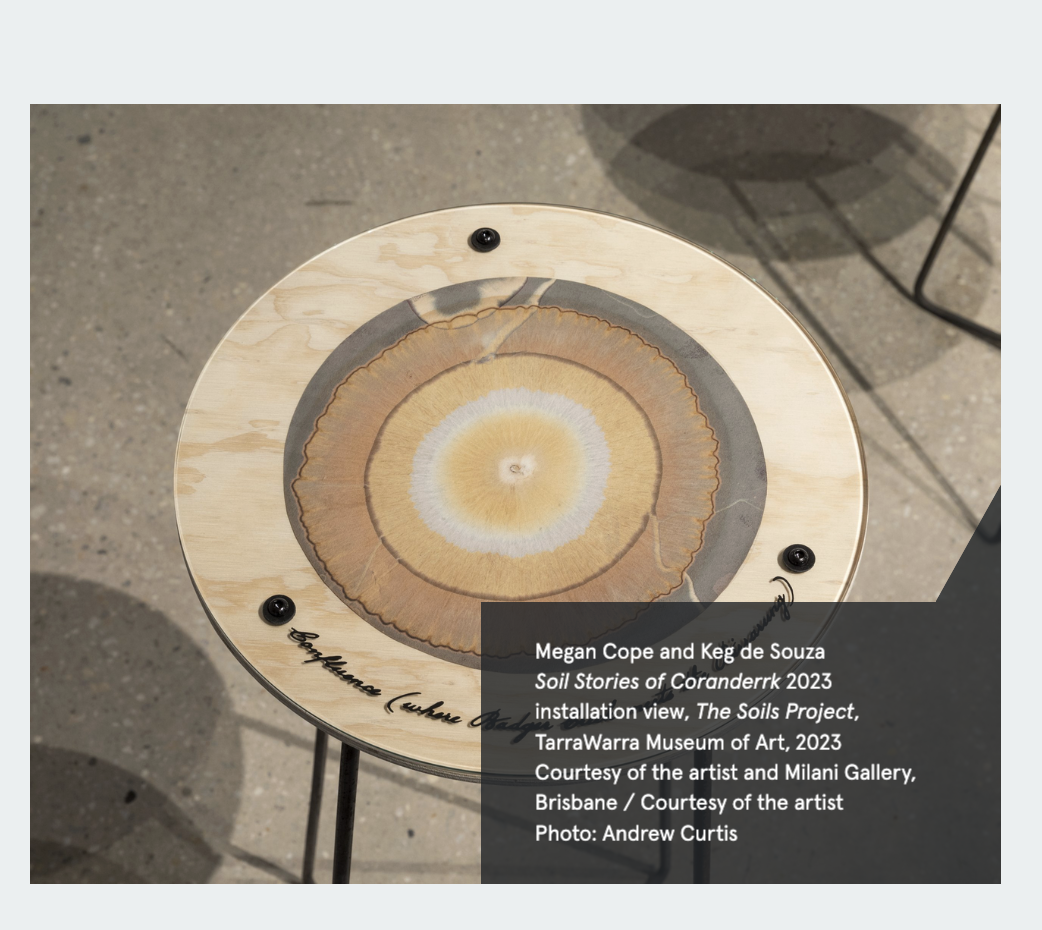
The Soils Project
Group Exhibition at Tarrawarra Museum of Art where soil serves as both subject and metaphor, exploring environmental change and colonisation.
https://www.twma.com.au/exhibitions/the-soils-project/
Charles Jones
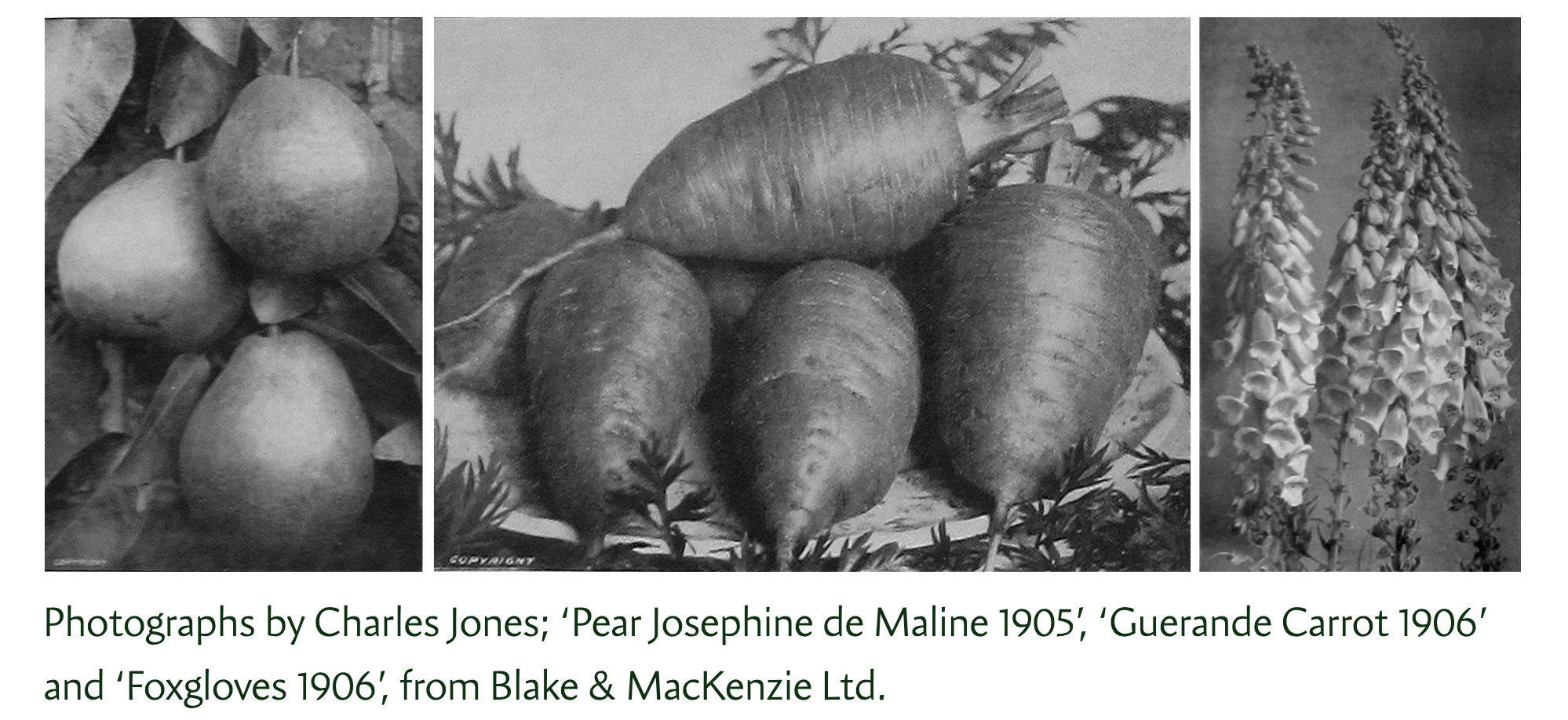
From 1893 to 1905 Charles Jones was recorded as being Head Gardener at [Great] Ote Hall near Burgess Hill in Sussex, UK, and his photography skills originated in documentation of this work. He then became, and worked as, a professional photographer until the mid 1930s with his work appearing in gardening books and advertising.
https://gardenmuseum.org.uk/charles-jones-gardener-and-photographer/?srsltid=AfmBOood4PVY_fvxAPE-nX7-5nvFSSTx2r39luisGHiqz16jT8uOsuUI
Judith Nangala Crispin
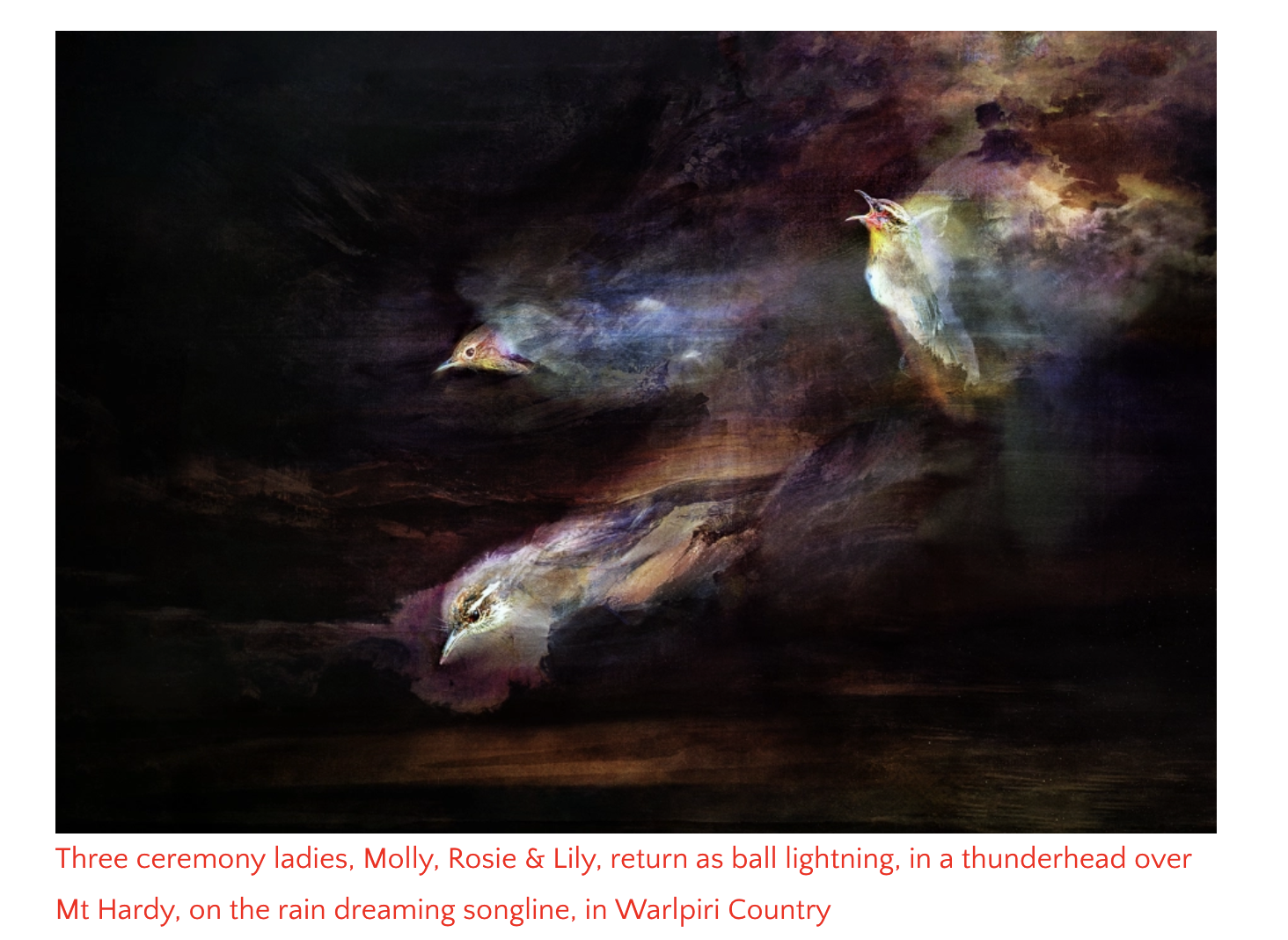
Lumachrome prints, made from found deceased animals, victims of road-kill.. Highly individualised practice that varies with each piece and incorporates layered elements, including blood of the deceased animal, ochre and sticks gathered at the site, with exposure created by the sun.
“These works are the result of genuine collaboration with the landscape. They are literally constructed from light, earth and flesh.” Judith Nangala Crispin.
Judith is an accomplished poet, and the work titles are also very moving.
https://judithcrispin.com/2025/03/06/2025-lumachrome-prints/
Johanna Rotko
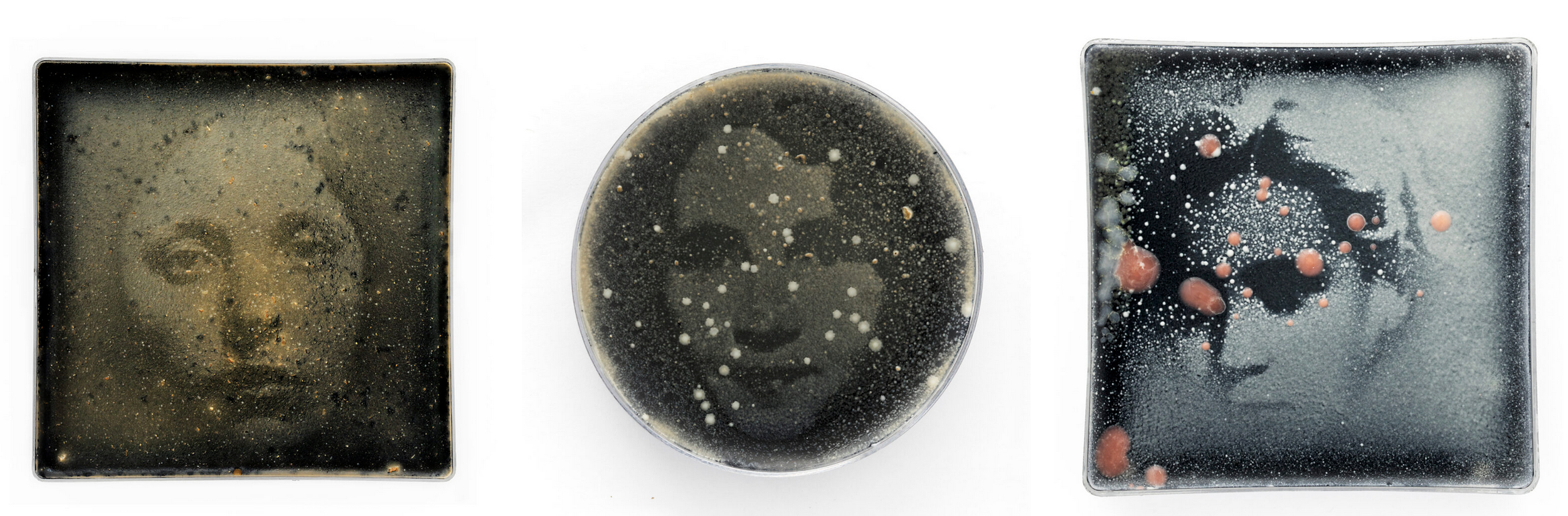
Johanna Rotko introduces various microbes such as yeasts and moulds into photography material, and photographs them while living and interacting. Once she has finished her investigations she composts the materials in a bokashi compost system. This is the website specific to these works termed ‘yeastograms’: http://www.hiivagrammi.fi/portfolio2019/
Her general artist website is here:. https://www.johannarotko.com/
Future Materials Bank - Salt Fixing
These images demonstrate using a reduction of seawater to fix photographic works.
https://www.futurematerialsbank.com/material/salt-fixer/
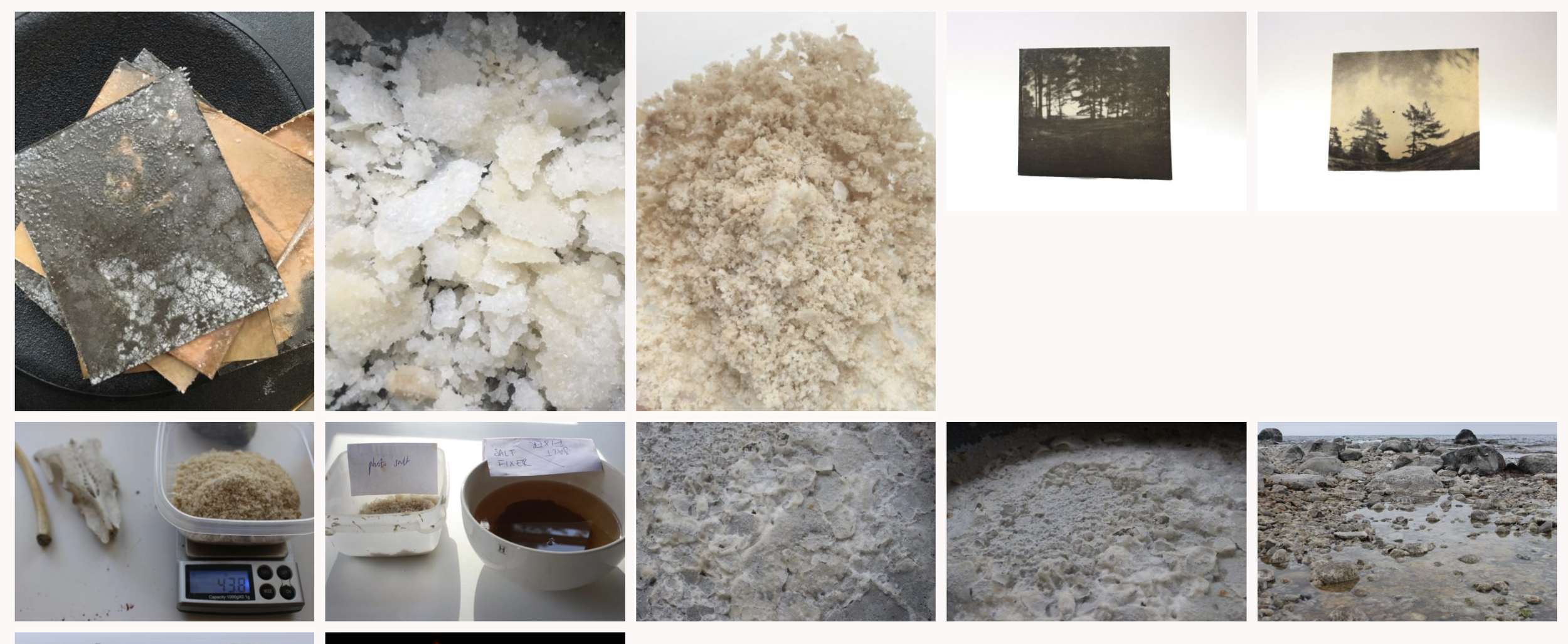
Photos: Hannah Fletcher, Alice Cazenave, undated.
The Future Materials Lab at the Jan van Eyck Academie stores a selection of physical samples from the Future Materials Bank. Book an appointment at the Lab and use the numbers below to locate samples.
0087-1

The Future Materials Bank website has the soul of an art gallery of sustainable artworks in practice and motion, sharing knowledge and methods of a staggering range of environmentally and socially sustainable materials.
Sammy Hawker
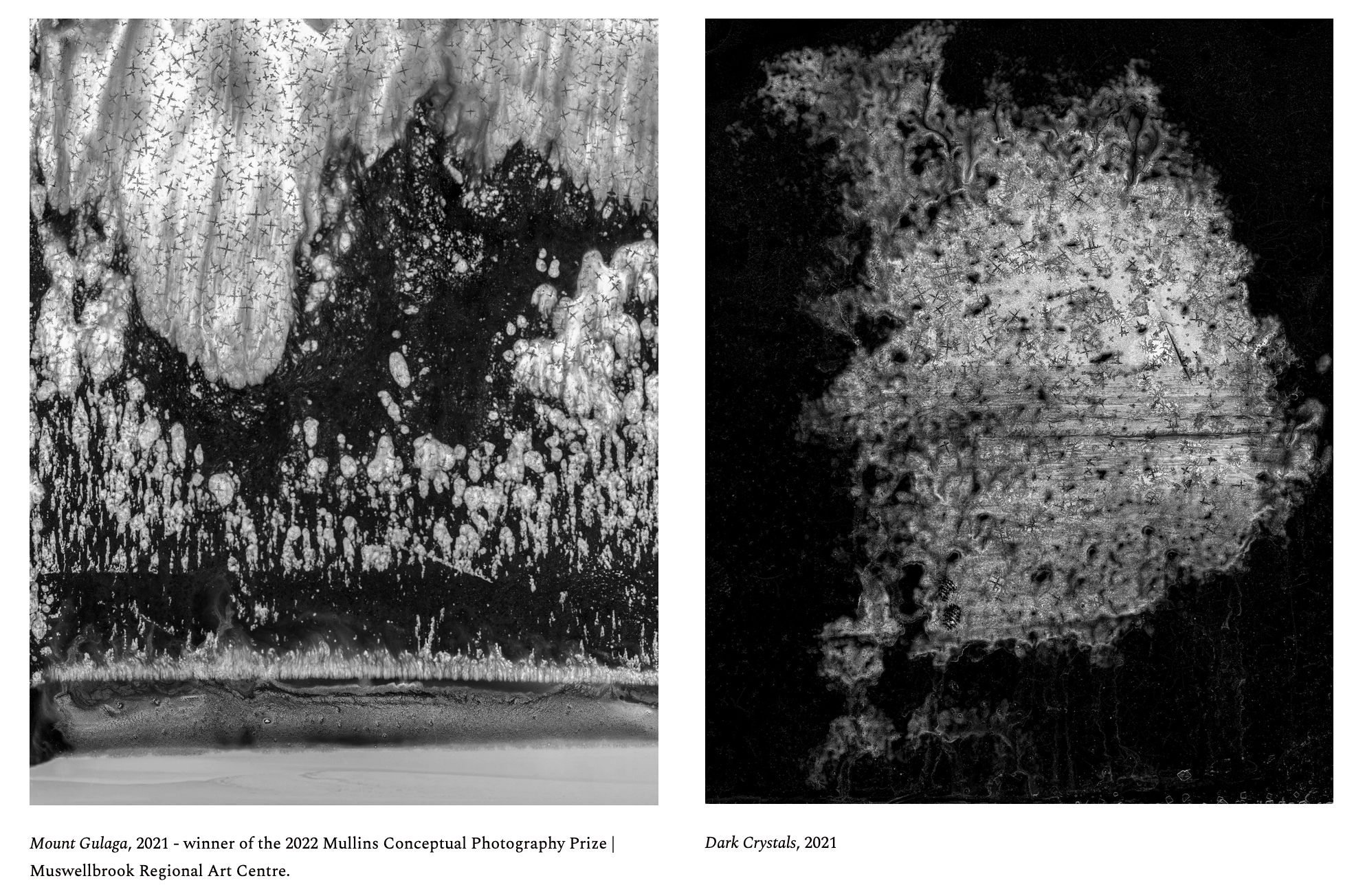
Sammy Hawker
https://sammyhawker.com/2023-salt
Australian photographer who actively collaborates with location in which she works, often processing work on site, and using collected water and salt to process negatives. Part of the artist statement for her project ‘Salt’ reads “an essence of the site is introduced to the frame as the vibrant matter paints its way onto the negative, a reminder of the dynamic agency of the more-than human, the unresolved mysteries that exist around us and the resonance of the deeper forces that will so creatively interrogate and transform a photograph”.
I also found an interview with Sammy here: https://www.abc.net.au/news/2024-02-11/canberra-photographer-sammy-hawker-processes-film-with-saltwater/103444912?utm_source=chatgpt.com
Jean Dubuffet
The Exemplary Life of the Soil (Texturology LXIII), an oil painting (1958, by Jean Dubuffet) seems to me to achieve self-contextualisation.

https://www.tate.org.uk/art/artworks/dubuffet-the-exemplary-life-of-the-soil-texturology-lxiii-t00868
Additionally, I found the following quite general critical introduction to the work of Dubuffet, whose work strongly resonates : https://www.moma.org/momaorg/shared/pdfs/docs/research/MRCD_1_Dubuffet.pdf
I also came across this blog, which included a quote I loved, but have been unable to authenticate for proper citation. Regardless, the quote, attributed to Dubuffet, aptly describes my interest in his phenomenological approach to artmaking “'Mud, rubbish and dirt are man's companions all his life. Shouldn't they be precious to him, and isn't one doing man's service to remind him of their beauty?'“ :https://www.jimcarrollsblog.com/blog/2021/6/24/dubuffet-waging-a-war-against-cultural-conditioning
Shelley Watters.

Installation view: Compost is so hot, Shelley Watters
https://www.shelleywatters.com/compostissohot/
Compost as both methodology and ‘embodied artistic practice’, and as an ‘act of repair’ across a multidisciplinary approach including photography, textile, sculpture and sound.
Barney Pau
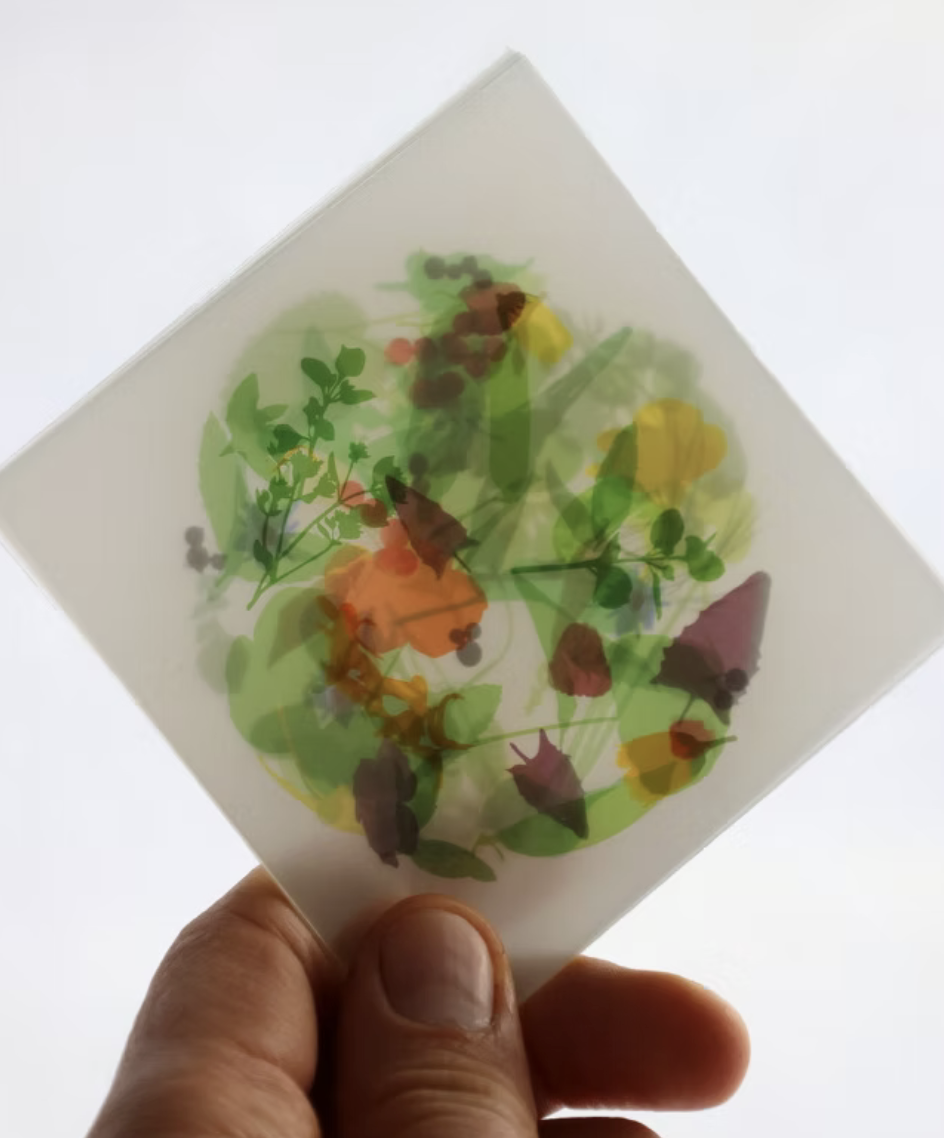
Hairy Salad, Barney Pau
https://www.barneypau.com/hairy-salad
This interactive artwork demonstrates biodiversity in nutrition, game-ifying the elements of a salad and mapping them to a garden.